


REMNANT SEASON 01 FIELD NOTE
When the enemy stops probing and starts pressing, every man on the line finds out which version of himself actually showed up.
There is a specific moment in a night breach when the noise stops making sense. Not because the noise stops. Because the brain that trained on peacetime sounds cannot process what it is currently receiving fast enough to keep pace with what the body has to do next. The men who survive that moment are the men who prepared for it. The men who don’t are the ones who stood on the line believing that knowing it could happen was the same as being ready for it.
Mark Smith finds out this weekend which category he falls into.
The Smith family has been at Camp Ridge for four days. Day Four of a seven-day probationary period that was never going to end on a schedule. Probation ends when it ends, and at Camp Ridge it ends when Calloway decides the people inside the outer wire have either proven they belong behind the inner wire or proven they don’t. The grocery store foray answered some of his questions. The dead scout on the return trip answered others. But there are questions that no supply run can answer, and they are the same questions a defended perimeter asks every night it holds.
This weekend, the Black Vultures stop counting from the tree line and start moving.
On Episode 11 of Survival Dispatch: Remnant Night Breach a Black Vulture probing attack hits the Camp Ridge perimeter after midnight. The Smiths and Moons, posted on the outer line, take their first defensive action as Camp Ridge personnel rather than as a family waiting to be admitted. In the middle of the breach, a lone man arrives at the gate asking for shelter, and Calloway holds him outside the wire until the perimeter is clear.
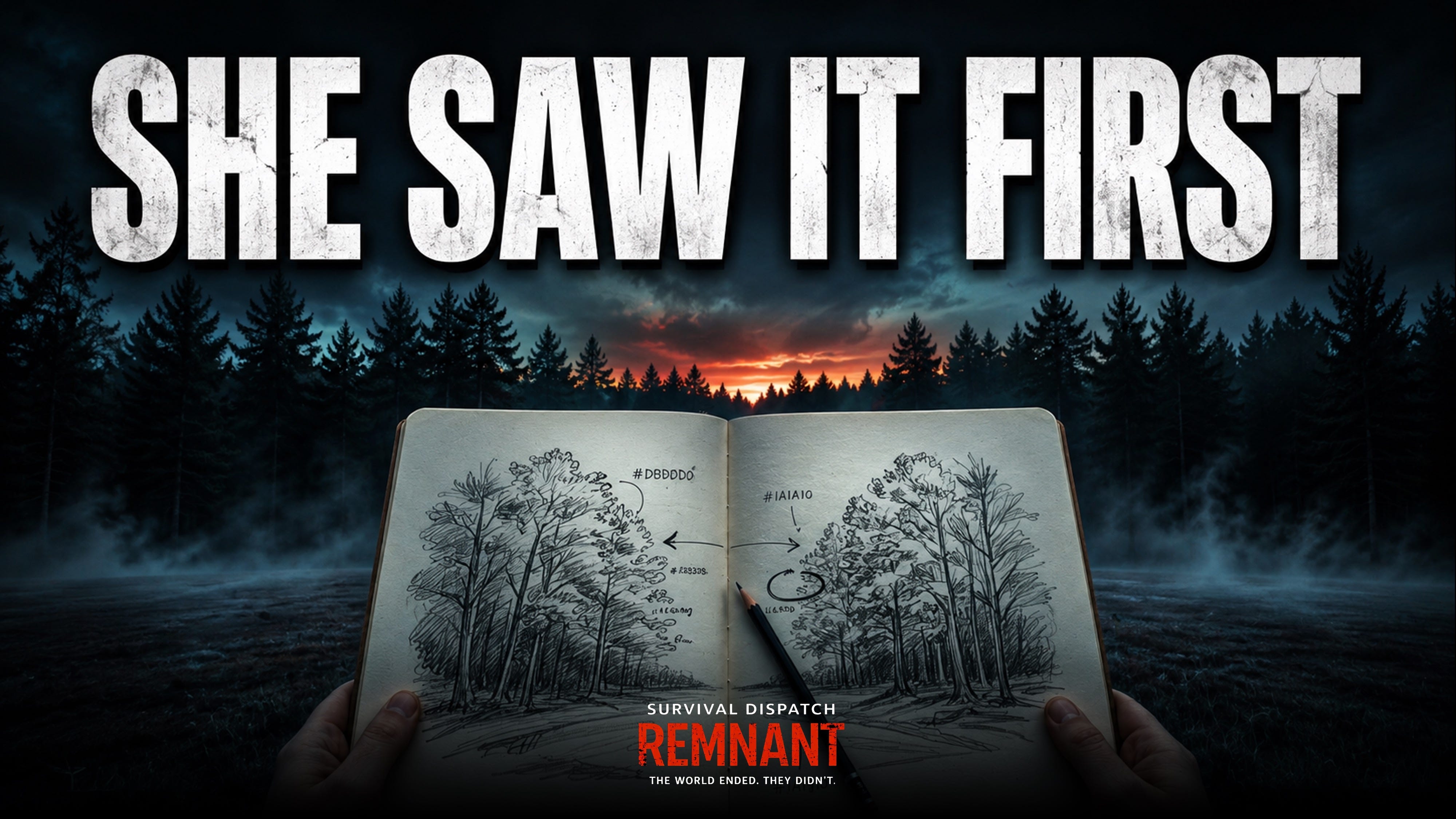
And on Episode 12 The Girl Who Saw It First the morning after. The breach is contained, but the Vultures are not finished. And the person who sees the second probe forming before anyone else on the camp’s senior watch is twelve years old, sitting at the edge of the outer camp with a sketchpad.
LISTEN TO EPISODES 11 & 12 THIS WEEKEND
Night Breach (Sat) and The Girl Who Saw It First (Sun) on Survival Dispatch Remnant
New episodes every Saturday and Sunday
What a Probe Is Really Telling You
Before the Vultures hit the wire this weekend, they spent three days counting. Three spotters in the north tree line, holding position, recording numbers, and departing before first light. That was not aggression. That was intelligence collection. And the intelligence they collected had one purpose: to answer a specific military question about Camp Ridge.
Not can we take it. That question comes later, and it requires different information.
The question the spotters were answering is: how much will it cost us?
That distinction matters more than most preparedness guides acknowledge. The force that is probing you is not necessarily committed to an assault. It is running a cost-benefit calculation. How many defenders? How are they positioned? Do they run rotating watches or fixed posts? Do they respond to noise discipline breaks or ignore them? When they do respond, how fast, and where do they concentrate?
A probe is a question. A breach is the first version of an answer. And the answer that Camp Ridge gives in Episode 11 will determine whether the Vultures ask the question again, or escalate to something more direct. This is why the conduct of every man on the line tonight is not just tactical. It is strategic. Individually, they are holding a section of wire. Collectively, they are writing the after-action report that Pryor’s people will carry back to their staging point before dawn.
On the difference between being tested by a probe and being tested by a perimeter: the probe tests whether you respond. The perimeter tests whether you are still there when it’s over.
The Five Things a Night Breach Reveals
Veteran defensive operators — the ones who have studied sustained perimeter defense under real conditions, from insurgent-contested compounds in the Middle East to the defended positions that kept communities alive during civil breakdown in Venezuela and South Africa — consistently identify five qualities that a night breach exposes in every man on the line. Not qualities that can be fabricated. Qualities that were either built before the night or weren’t.
1. Sector discipline under disorientation.
The first instinct in a breach is to move toward the noise. That instinct gets people killed. A perimeter holds because each man holds his sector, and the moment one man abandons his sector to reinforce another, there is a gap in the wire. Night, noise, and adrenaline all push in the direction of breaking sector discipline. The men who hold it anyway are the men who trained it past the point of instinct and into the territory of reflex. The camp finds out tonight which of its defenders are there.
2. Communication discipline when the impulse is to yell.
Contact is loud. The response to contact is usually louder. Shouted commands, shouted acknowledgments, shouted casualty calls — all of them give the enemy exactly what they are trying to collect: the shape of your defensive response, the number of your active voices, the location of your command element. The defenders who communicate quietly under contact are the ones who have done it before, or who have been trained hard enough that the discipline runs below the panic layer. The defenders who yell are the ones who forgot they were on a perimeter and remembered they were afraid.
3. Target identification before trigger.
A night breach creates the most dangerous conditions for fratricide that a defensive posture ever faces. Defenders moving to reinforce. Unknown contacts at the wire. An unplanned arrival at the gate. The men who wait for positive identification before they fire are the men who trust their training over their adrenaline. The men who don’t are the men who create second-order casualties that the camp cannot absorb. One of the live variables in Episode 11 is a man who arrives at the gate during the breach who is not a Vulture. What happens to him depends entirely on whether the men at the gate are operating their trigger discipline or reacting to noise.
4. Sustained aggression, not sprint aggression.
A probe is designed to find the point where a defensive line exhausts itself responding. The Vultures who hit Camp Ridge’s perimeter tonight are not trying to overrun it. They are trying to make it run. Run toward contacts, run away from shadows, run the watch rotation ragged until the sector gaps open on their own. The defenders who pace themselves — who respond with measured force and return to position rather than chasing contact into the dark — are the ones who are still alert at the three-hour mark when the second probe comes.
5. The ability to function the morning after.
A night breach that runs long enough extracts a cognitive cost that shows up at first light, when the adrenaline is gone and the fatigue is not. The people who can still observe, still think, and still act at 0600 after a contested night on the wire are the people the camp will send outside the wire again. The people who cannot are the people the camp will protect. There is nothing shameful about falling into the second category. But Camp Ridge needs people in the first one, and Episode 12 is built around what happens when the person who still has her eyes working at first light is the last person the camp’s senior watch expected to produce usable intelligence.
Episode 11 puts every one of those measurements into play inside of a single night. The Smiths don’t know they’re being measured. The breach is real and the danger is real and the cost before the night is over is real. But Calloway is watching, the way men who run defended positions always watch, and what he sees on the line tonight will determine what he does with the Smith-Moon probation before Sunday’s episode ends.
SUBSCRIBE TO SURVIVAL DISPATCH: REMNANT
The full breakdown of what the breach reveals, and what Emily sees at first light that no one else does — for paid subscribers.
New episodes every weekend
— THIS ARTICLE CONTINUES FOR PAID SUBSCRIBERS —